
Latest entries
Interest in buying property in Sicily is growing year on year among Poles. This is not a passing fad — it is a response to several parallel trends: affordable prices compared to Western Europe, an increasingly frequent network of direct flights from Poland, growing geopolitical uncertainty prompting asset diversification, and a genuine longing for a lifestyle that everyday life in Poland does not provide. For Poles, Sicily is becoming what Provence was for the British a decade ago — a place one first visits out of curiosity, and then returns to with a purpose.
However, the mere desire to buy is only the beginning of the journey. The Italian property market is unique, varies from place to place and is full of formal nuances that do not show up in the photos in the adverts. This guide explains what the buying process looks like in practice — and why choosing the right partner to carry it out is no less important than choosing the property itself.
Why Sicily, and which part of it
Sicily is not homogeneous. Each of its regions has its own market character, its own prices and its own investment logic. Treating them as variants of the same decision is a mistake that many buyers make during the initial research stage.
Taormina and the east coast constitute a prestigious market — a small town with an ancient theatre, panoramic views of Mount Etna and the Ionian Sea, attracting affluent tourists for many months of the year. Prices are significantly higher than in other parts of the island, but the potential for short-term rentals is the strongest of all Sicilian locations. This is the place for those seeking prestige combined with real profitability.
Ragusa, Noto and Modica — Sicilian Baroque listed on the UNESCO World Heritage List — are south-eastern regions with a distinctly unique character. Quieter, less overrun by mass tourism, with rich architecture and lower prices than Taormina. They attract buyers seeking authenticity, stone-built properties and a respite from the hustle and bustle of city life. The potential for property regeneration in these towns is real, though it requires patience and high-quality preparation of the rental offering.
The Palermo area and the northern coast offer a more diverse market — ranging from historic townhouses in the centre of the island’s capital to seaside villas in Carini or the resort town of Cefalù. Palermo is a city with a strong cultural identity, extensive infrastructure and growing tourist traffic. The proximity of the airport (one of the best-connected to Poland) is an additional logistical advantage.
Trapani and the west coast represent the most tranquil part of Sicily — with access to the turquoise waters of the Zingaro Nature Reserve, views of the Aegadian Islands and the Arab-Norman architecture that sets this region apart from the rest of the island. Prices here are still relatively low, and tourism is developing at a pace that gives investors the feeling they are here before the crowds.
How to buy property in Sicily — step by step
As citizens of the European Union, Poles buy property in Italy on the same terms as Italians — without any additional permits or restrictions. The procedure itself, however, differs from the Polish one and requires an understanding of a few key elements.
The first step is to obtain a codice fiscale — an Italian tax identification number, without which no transaction is possible. It can be obtained from the Agenzia delle Entrate (the Italian tax office) or through the Italian consulate in Poland — this usually takes a few days.
Once a property has been found and initial negotiations have taken place, a proposta di acquisto is submitted — a written offer to purchase which, once accepted by the seller, becomes a legally binding document. This is a critical moment: many people sign the proposta without first verifying the property’s legal status, which can lead to serious complications. Before submitting an offer, it is essential to check the cadastral documentation, the property’s ownership history, any mortgage encumbrances, and whether the actual condition of the building matches the documents.
The next stage is the compromesso — a preliminary contract, upon signing which the buyer pays a deposit (caparra), usually amounting to 10–20% of the price. It is the buyer’s responsibility to register the preliminary contract with the tax office. The final deed of transfer (rogito) is signed before a notary, who simultaneously collects the applicable taxes and registers the transaction.
The key tax decision is the choice of purchase method. Prima casa — a property purchased as a main residence — is subject to a transaction tax of 2% of the cadastral value (significantly lower than the market price). Seconda casa — a holiday or investment property — is subject to a rate of 9%. Transaction costs must include the notary’s fee, any estate agent’s fees and — for older properties or those requiring a technical survey — the fee of a geometra, the Italian equivalent of a building surveyor. The entire process of closing the transaction usually takes between three and six months, depending on the completeness of the documentation.
Where most buyers make mistakes
Experience in handling transactions on the Italian market shows that the same mistakes recur with astonishing regularity. The first and most common is signing the proposal without verifying the documents — under pressure from the seller or out of enthusiasm after viewing the property. The second is relying solely on photos and online listings without visiting the property in person and speaking to someone who knows the local market first-hand. The third — and perhaps the most costly — is having no plan for what to do with the property after purchase.
This last mistake is particularly serious in the case of Sicily. A house or villa purchased with the intention of visiting it a few times a year and renting it out the rest of the time requires an efficient management model in the owner’s absence. Sicily attracts a high volume of tourists for many months of the year — a properly prepared and professionally managed property can therefore generate income that significantly alters the financial viability of the entire investment. But only if the management is truly professional.
What to look for in an agency to guide you through this process
The market for services catering to Polish buyers in Sicily is growing, which is good news. The bad news is that the quality of these services varies greatly. A few criteria help distinguish an agency that knows its stuff from one that is simply responding to growing demand.
Firstly — knowledge of the local market in specific locations, rather than Sicily as a tourist destination. The difference between the markets in Taormina, Ragusa and Palermo is significant enough that a general knowledge of Sicily is not sufficient to guide a client through a specific transaction. Secondly — the ability to carry out legal and technical due diligence on a property before making an offer, rather than merely pointing out available listings. Thirdly — support throughout the entire process: from searching for and selecting properties, through to negotiations and the notarial deed.
Vilea Property Boutique is an agency that has deliberately chosen a narrow specialisation: serving discerning clients at every stage of their property journey — in Poland and abroad, including Sicily and the Italian market. The boutique approach means that each client is served individually, rather than through a mass-market model. Vilea supports buyers from the moment they first explore the market, through full property verification, negotiations and the finalisation of the transaction, right through to professional rental management of the property in Poland, should they decide to move and rent out their home there. Vilea also helps find a rental management company on the island.
For clients considering Sicily as an investment combined with personal use, this model makes concrete economic sense: the property is prepared and managed to generate income during the months the owner is absent, and their stay is planned outside the peak season or at times that do not clash with the rental.
Sicily as a decision, not an impulse
Buying property in Sicily should be a decision made with a cool head, with full awareness of the process, costs and operational plan for the years following the transaction. The island is beautiful enough and attractive enough in the market for this decision to be both rational and emotionally satisfying — but only if it is carried out properly.
If you are considering buying a house or villa in Sicily and are looking for a partner who understands both the specifics of the Italian market and the expectations of a Polish investor regarding the quality of service — contact Vilea Property Boutique. The first meeting is always a conversation about what you are really looking for — with no pressure and no pre-packaged deals.
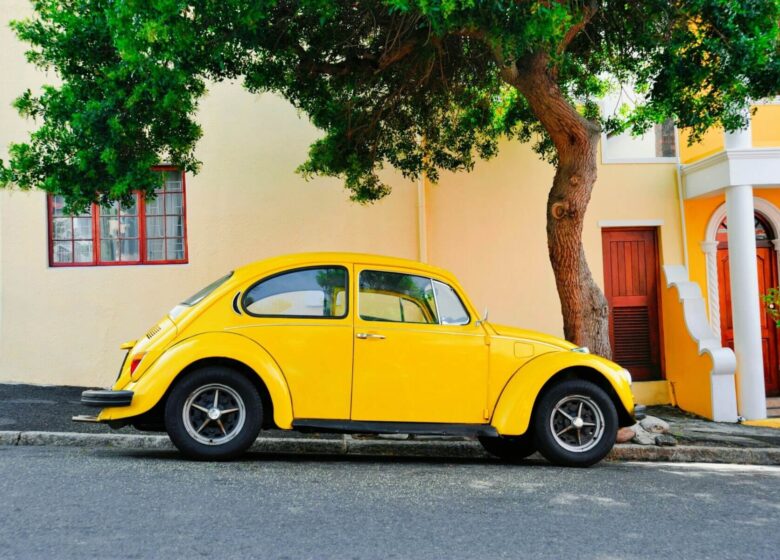
Photo: Photo by Ulf Meyer on Unsplash
Author: Adrian Kołodziej