
Latest entries



For years, wealthy Polish families faced a choice that had been resolved in Western Europe decades earlier: how to effectively protect their wealth from fragmentation, how to ensure the continuity of investment decisions across generations, and how to build a structure that would not fall apart at the first generational change. Answers were sought in foreign trusts, Liechtenstein foundations and Maltese holding companies. Since 22 May 2023, when the Act on family foundations came into force, this landscape has changed fundamentally. Poland has joined the ranks of jurisdictions offering their own, domestic tool for succession and asset protection — comparable to solutions that have been in place in Germany or Sweden for centuries.
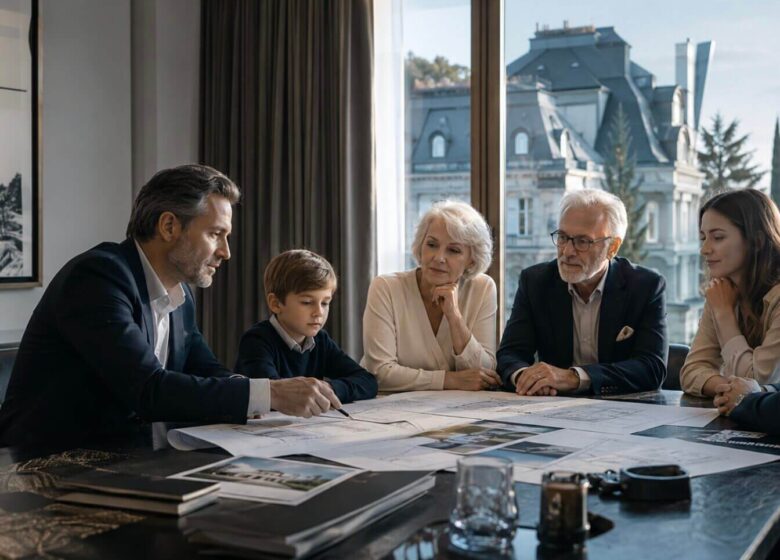
What is particularly worth noting, however, is not the question of what a family foundation is in itself, but its relationship to another concept increasingly present in the discussions of wealthy families: the family office. Both terms sound similar, both refer to the management of intergenerational wealth — and yet they differ fundamentally. Understanding this difference is the starting point for building a strategy that will truly safeguard what has been built up.
What a family foundation is — and what it is not
A family foundation is a legal entity — an organisation that exists independently of its founder and does not cease to exist upon the founder’s death. The founder contributes assets to it (the minimum contribution is 100,000 zlotys), specifies in the charter who the beneficiaries are, the rules governing the disbursement of funds, and the objectives the foundation is to pursue across successive generations. The key word here is: durability. A foundation does not inherit — it endures.
Under Polish law, a family foundation benefits from an attractive tax regime. As a general rule, income from activities falling within the statutory list — including rental income, dividends, interest and securities — may be exempt from corporation tax at the foundation level. Taxation arises primarily when benefits are paid out to beneficiaries: the foundation then pays 15% CIT, and the beneficiary may be liable for PIT, depending on their degree of kinship with the founder. Therefore, each structure requires an individual legal and tax analysis.
However, a family foundation is a legal and succession planning tool, not an operational one. It sets out the framework — who owns the assets, who is entitled to benefits and under what conditions, and how succession takes place. It does not, in itself, manage assets in a strategic sense: it does not analyse the property market, does not decide on the reinvestment of rental income, and does not monitor the investment portfolio for market volatility.
What is a family office and where does the foundation end
A family office is a management structure — not a legal one. It may take the form of a separate company (single-family office, dedicated to a single family), an external service provided by a specialised entity (multi-family office) or — increasingly common in Poland — a hybrid structure in which a family foundation acts as an asset ‘container’, whilst the family office handles the active management of what lies within that container.
According to data as of 30 April 2026, over 7,000 applications had been submitted to the Register of Family Foundations, and 3,677 family foundations had already been registered. This shows that Polish entrepreneurs have very quickly begun to make use of this succession planning tool. This represents a huge wave of capital which — as one industry report aptly put it — is seeking professional structures, long-term strategies and advisers capable of combining asset protection with its active growth. The legal tool alone, however, is not enough. A management layer is required.
A family office provides this layer. Its scope covers investment portfolio management, tax planning, property supervision, succession planning in practical (not just legal) terms, financial education for the next generation, and often also handling the family’s day-to-day needs — from purchasing insurance to concierge-level bookings. A Polish family foundation combines functions that in other jurisdictions are often divided between a foundation, a trust and, indeed, a family office. This is its strength — but also a challenge, because the legal structure alone cannot replace active management.
Property in a family foundation — specific features and pitfalls
In the portfolios of wealthy Polish families, property occupies a special place — and this is no coincidence. Unlike shares or bonds, property is a tangible asset: it can be seen, valued locally, and passed on to the next generation whilst retaining the identity of the address. For the founders of family foundations, this is often the first class of assets they bring into the structure.
Long-term property letting generally falls within the scope of activities permitted for a family foundation and may benefit from a preferential tax regime. However, this requires proper structuring — particularly where short-term letting, ancillary services, related parties, or properties used in a manner similar to hotel operations are involved. From the perspective of building generational wealth, this is a model that is difficult to beat with any other tool available under Polish law.
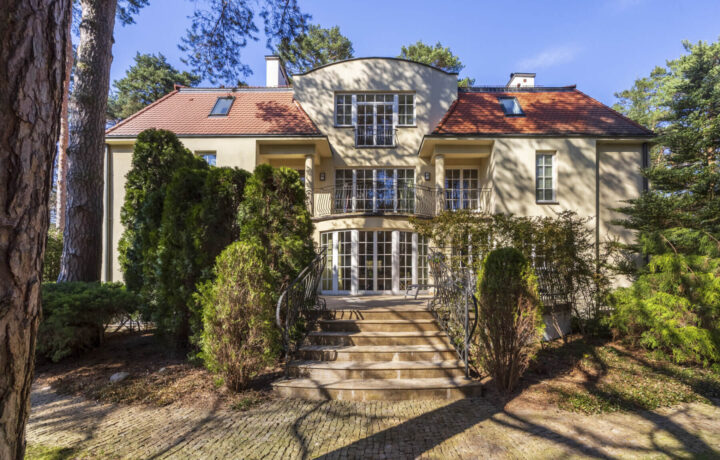
The management layer consists of a family office or a specialised property management partner. The foundation defines the ownership framework. Who manages the property and how, within this framework, determines whether the asset builds value or loses it. Professional management of premium property lettings is a service which, within the family office structure, fulfils precisely this role: it secures income, ensures the quality of tenants and maintains the asset’s value at a level commensurate with its class.
Can a family foundation be a family office?
This is a question that an increasing number of Polish entrepreneurs are asking themselves — and the answer is: yes, but with reservations. A family foundation can perform functions similar to those of a family office: managing a portfolio of properties, shares in companies, financial investments, and even coordinating the management of beneficiaries’ private lives, if the articles of association so provide. The assets belong to the foundation, not to individual family members — which in itself eliminates one of the greatest risks: conflict between heirs over the right to the assets.
However, there is a limit: active operational activity. A foundation cannot conduct business in the traditional sense — trading in property with the intention of making a quick profit, providing commercial services on a large scale, or functioning as a business entity focused on trading. This is the fundamental difference between a foundation as an ‘institution for the preservation of assets’ and a company as a tool for day-to-day operations.
In practice, the most effective structures combine both approaches: a family foundation as a legal and succession vehicle, alongside it — or as part of it — specialised partners responsible for the active management of specific asset classes. In the case of real estate, this means working with an agency that understands the specifics of the premium segment, capable of representing the owner’s interests with the discretion and precision expected by the asset owner.
Property as a pillar of long-term strategy
From the perspective of intergenerational wealth management, property fulfils a function that financial instruments cannot replace: it is a durable, local asset, well understood by successive generations and resilient to inflation over the long term. Within the structure of a family foundation — if properly managed — they can generate income for beneficiaries for decades, without losing value or requiring the family to be involved in their day-to-day administration.
The key lies in the quality of management. A premium property managed unprofessionally — with an unsuitable tenant, technically neglected, or poorly valued in the market — loses value in a way that is difficult to reverse. Managed properly, and embedded within the appropriate legal and tax structure, it becomes an asset that builds wealth without the need for the owner’s active involvement. The range of premium properties managed by Vilea Property Boutique embodies this philosophy precisely: an asset that works — discreetly, effectively, and in accordance with standards befitting its class.
The choice between a family foundation and a family office is not an either-or choice. It is rather a question of the sequence and composition of tools. A foundation provides a framework for wealth that will endure for generations. A family office — or a specialised management partner — ensures that the wealth within that framework does not stand still. If you are looking for a partner who understands the role of property within a family’s asset structure — rather than merely as a property to let — Vilea Property Boutique conducts such discussions with due seriousness and an understanding of the context.
Author: Adrian Kołodziej